
Introduction
I was hired as a freelance product designer by Ideate Innovation for an undisclosed AI startup. They wanted to make an AI SaaS platform to evaluate AI disruption, associated risks across domains and industries, and how to upskill for the future.
The client needed a designer to take them from idea to launch. I joined the project during the initial discovery phase, tasked with conceptualising the platform from scratch and refining it into final designs over the span of four months.
The product is currently in development and has not been publicly launched.
Discovery
We began the project with an in-person discovery workshop with the client. I facilitated the workshop alongside the Product Manager and Project Manager. Our focus was on identifying the value the product would provide to users by using the HMW (How Might We) framework to pinpoint short- and mid-term problems to address.
For instance, we explored how might we:
Empathise with users to alleviate their anxiety about staying relevant
Raise awareness of emerging technologies' impact
Enable users to reduce repetitive tasks prone to automation
Empower them to engage in more essential work beyond automation
Enhance users' market value
Enable them to reach the top 20% in their domain and industry
This exercise helped us define the problem space and prioritise potential solution areas, guiding our brainstorming sessions and ensuring we focused on the most promising avenues.
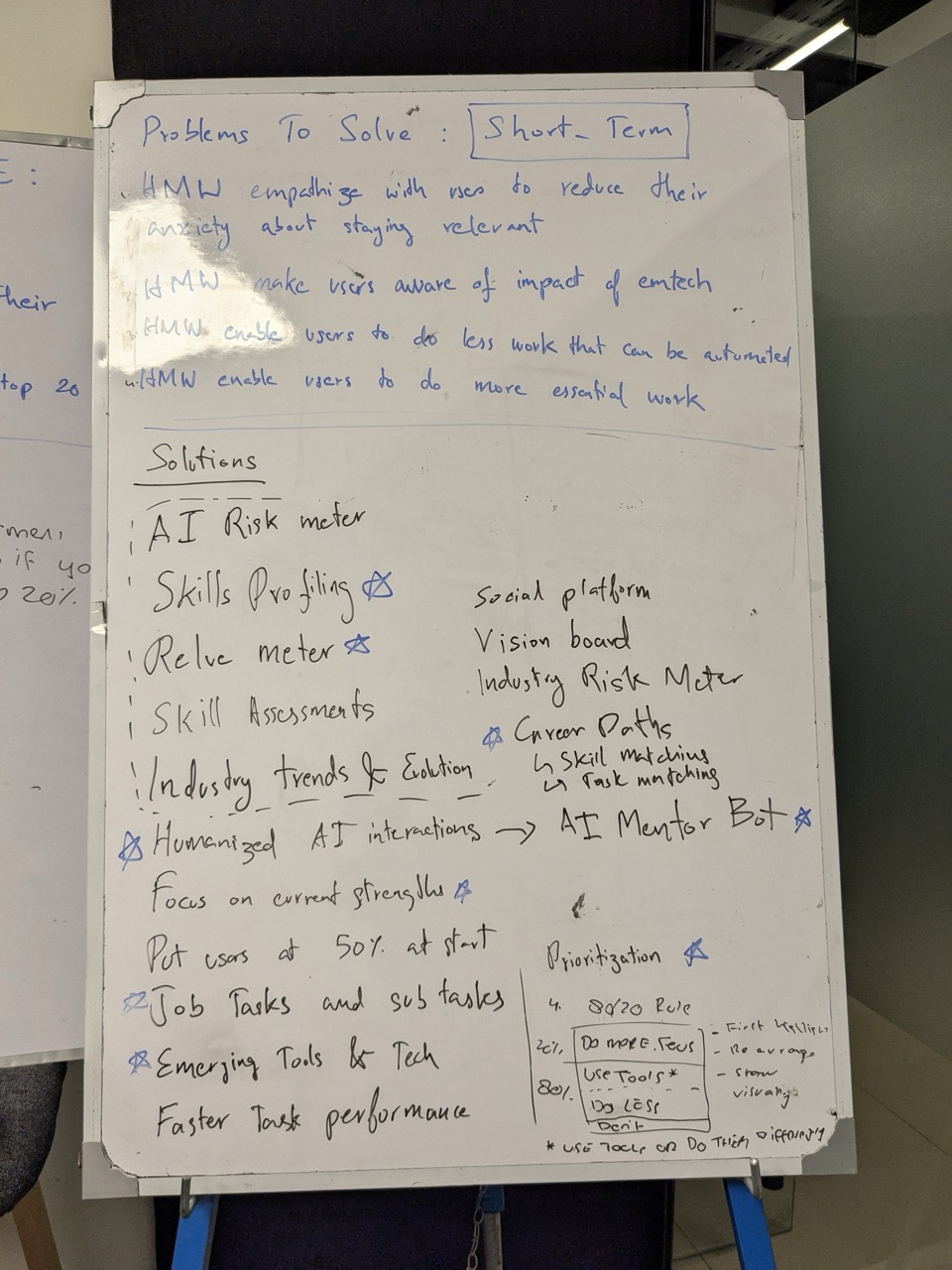
Discovery workshop session with the client
Ideation
Building on the solution areas identified during discovery, we conceptualised product use cases that we could design. I translated these use cases into multiple journey maps, outlining potential approaches we could explore.
I also did my secondary desk research on the client's competitors and new movers in AI career and coaching space.
I engaged in discussions and iterations with the clients to finalise the scope for the MVP's design.
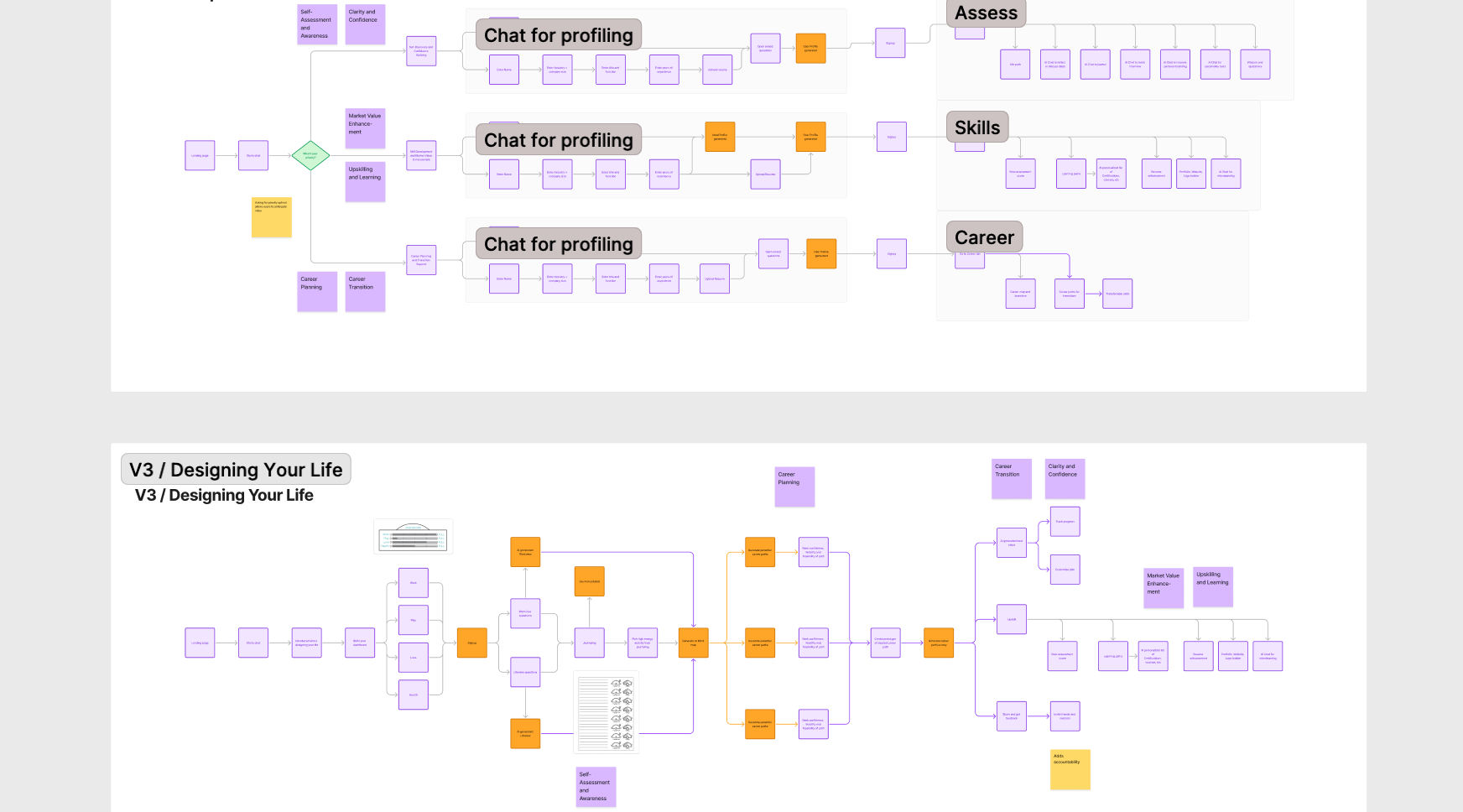
Mulltiple iterations of user journeys
Prototyping
I created low-fidelity wireframes of interaction patterns for each use case. These wireframes were then transformed into clickable Figma prototypes for the chat experience, dashboard, risk profile, and self-assessment tool.
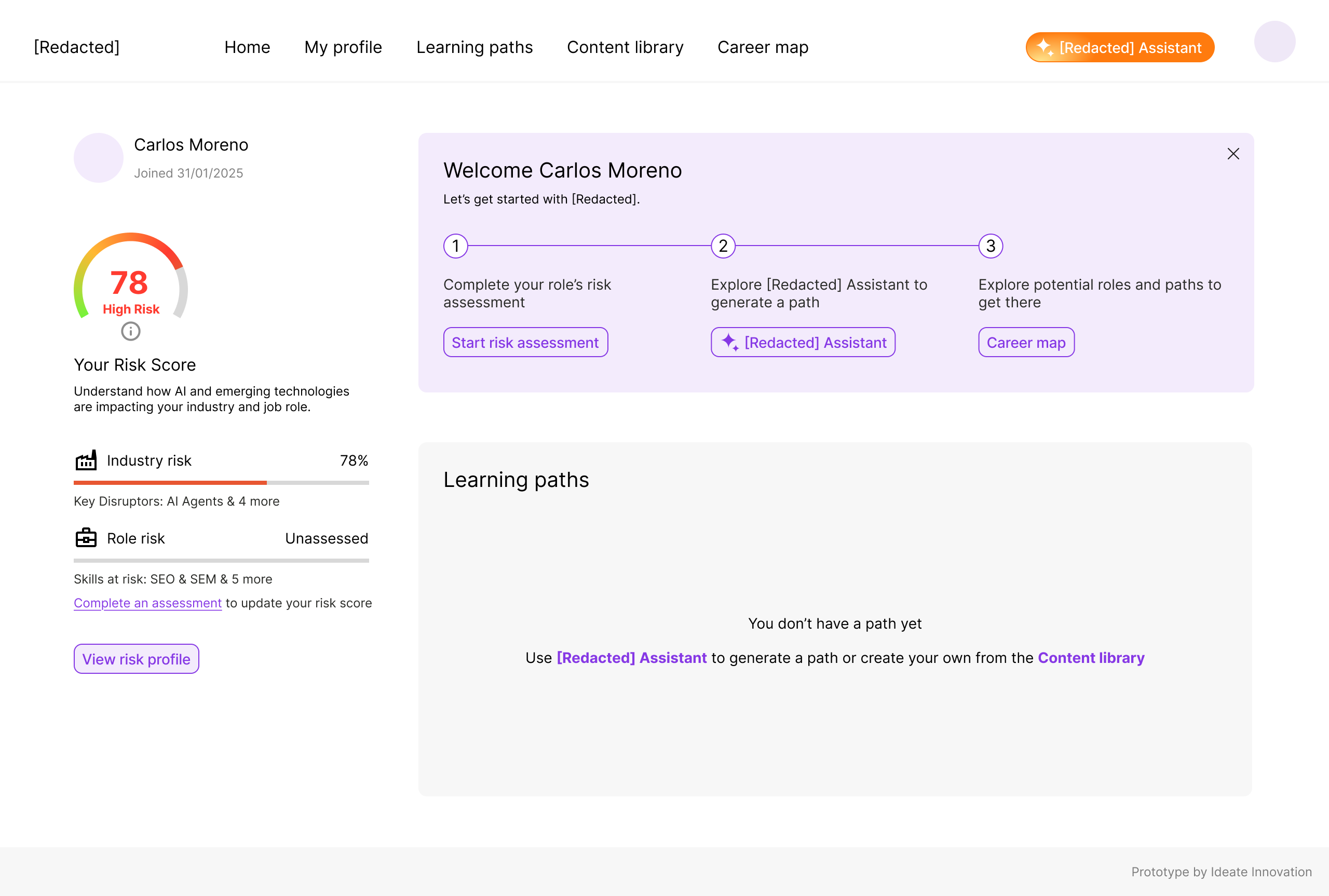
Low-fidelity wireframes and prototypes
For the MVP, the client requested that we focus on early career marketing professionals. We then recruited over 20 testers through UserTesting.com who matched this persona.
I conducted moderated tests with participants in three batches. I asked each participant to perform defined tasks, asking about their understanding and if they found each feature valuable or not.
I summarised the findings and recommendations from each session into reports for the clients. I iterated the prototype between each batch to quickly narrow down our desired use cases over the span of one month.
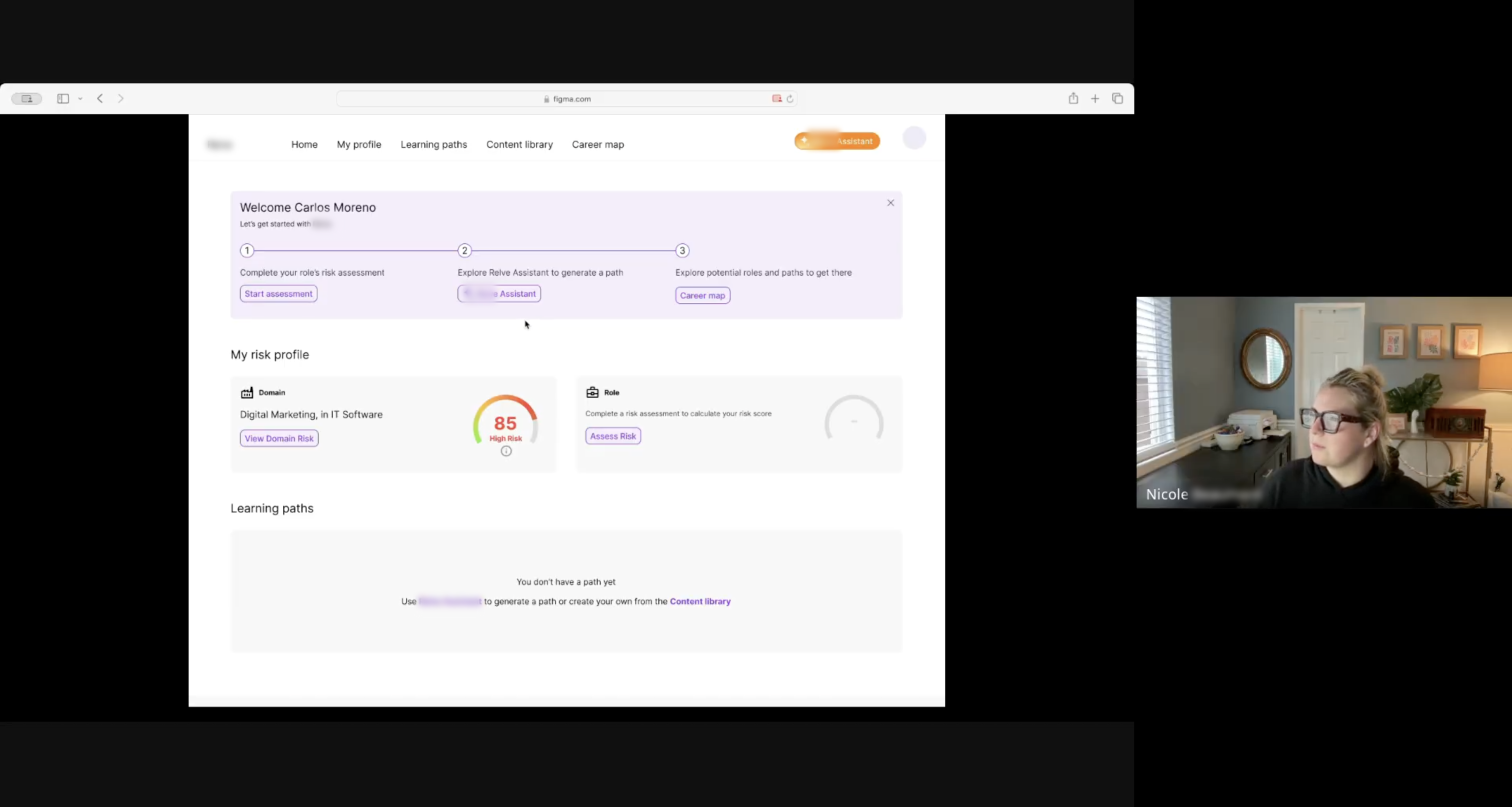
User testing findings and iterations
High-Fidelity Design
Once we were confident in our direction and finalised on the wireframes, I jumped into Figma to create the high-fidelity designs. I provided screen designs for the following UI patterns and features:
-
Onboarding AI chat - self-assessment tool to generate a risk profile
-
Risk Profile - a generated risk score based on the user's profile and industry
-
Learning Path - a custom AI-generated path for derisking
-
Resource Centre - a curated center for the latest courses, tutorials and resources
-
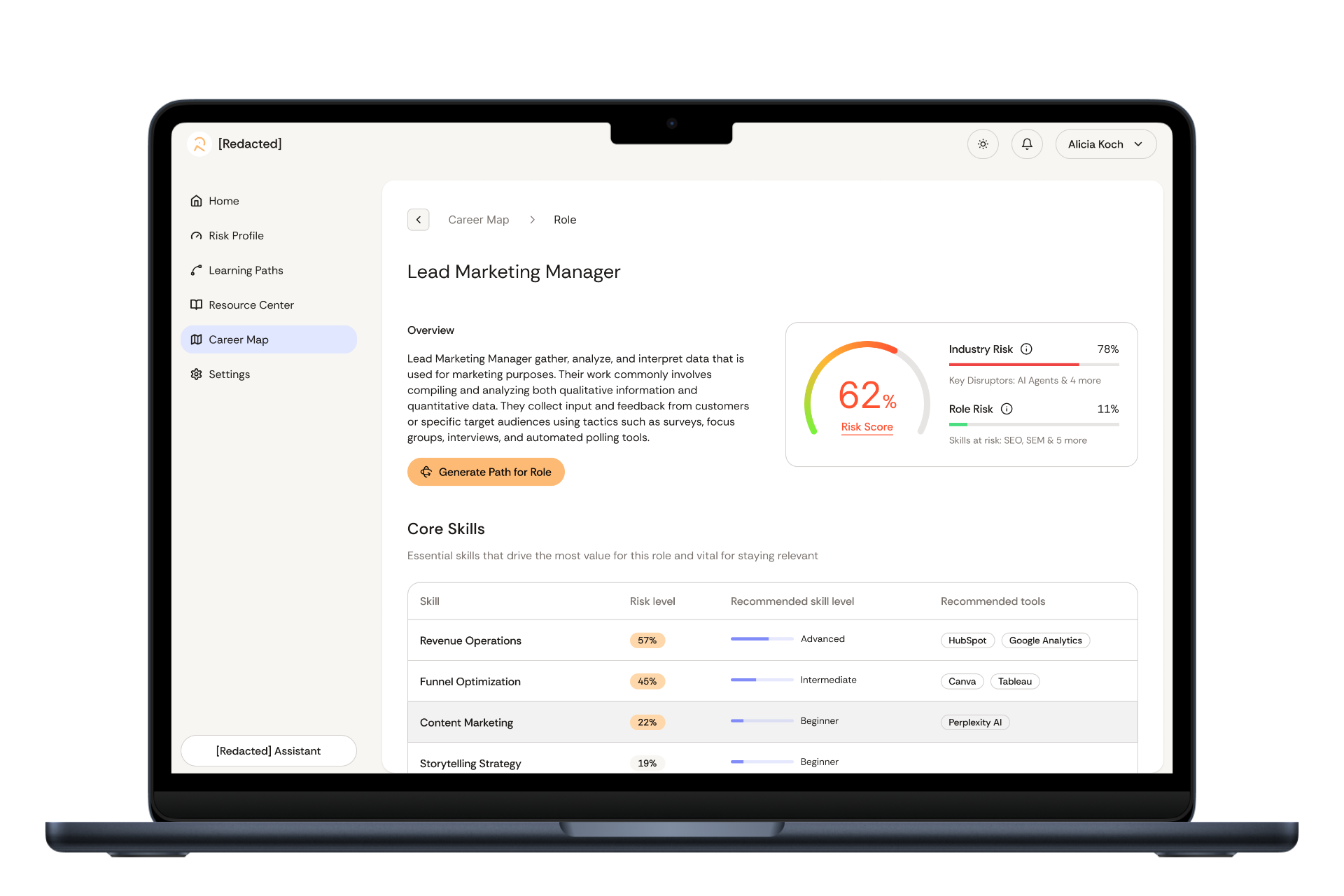
Career Map - explore adjacent career paths and upskill opportunities
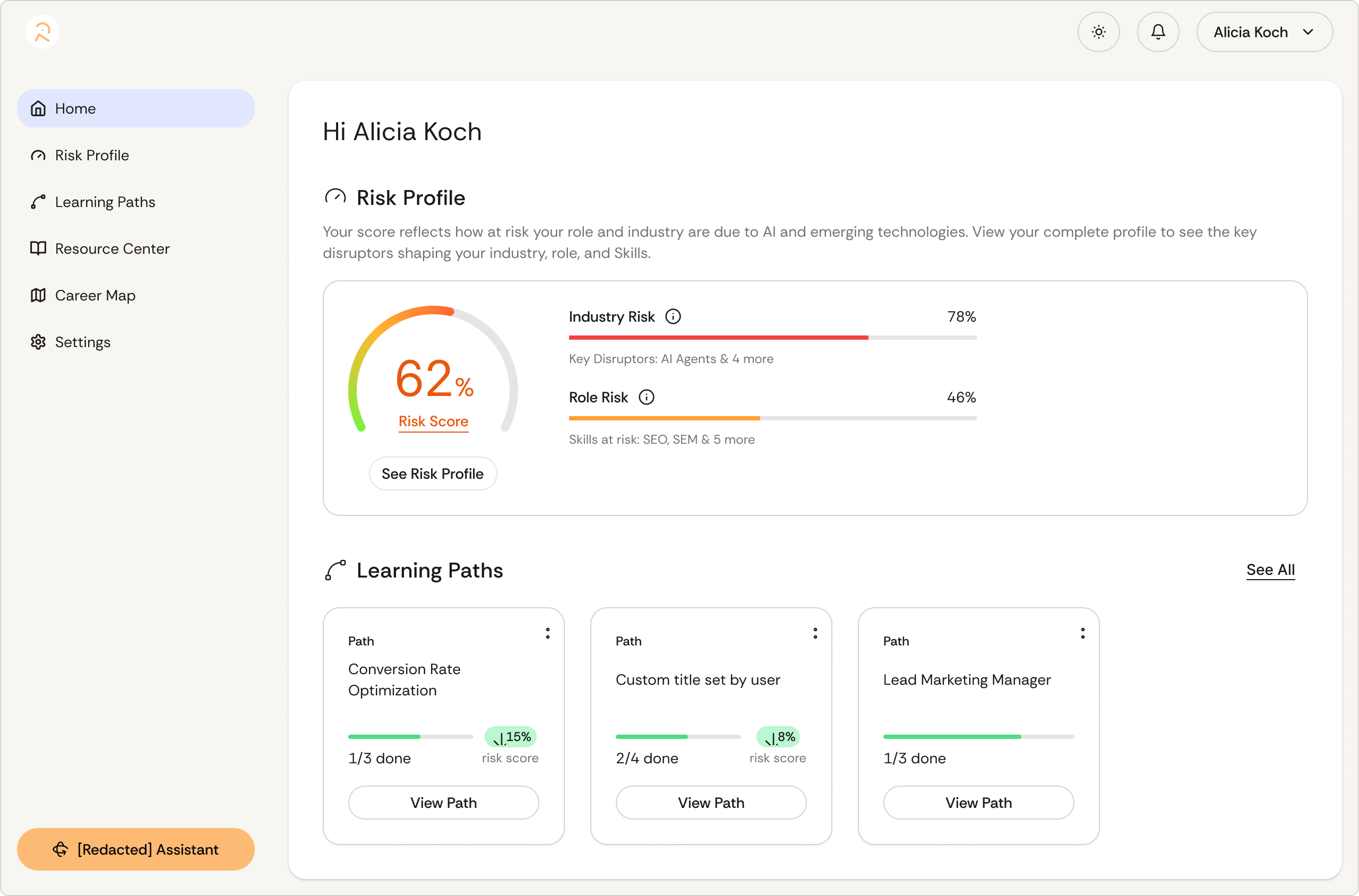
Dashboard view of the AI Risk Assessment Platform
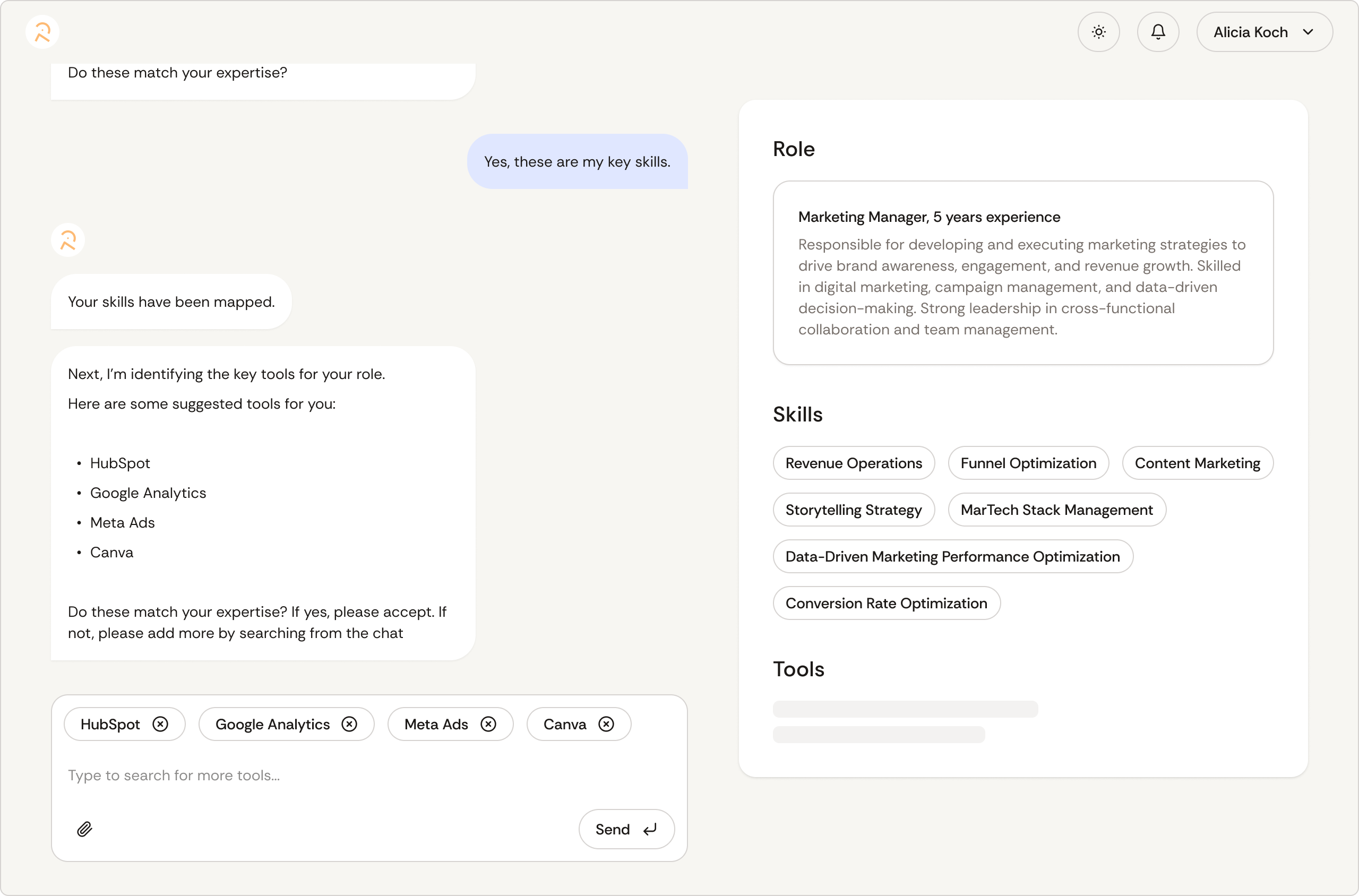
AI self-assessment tool interface
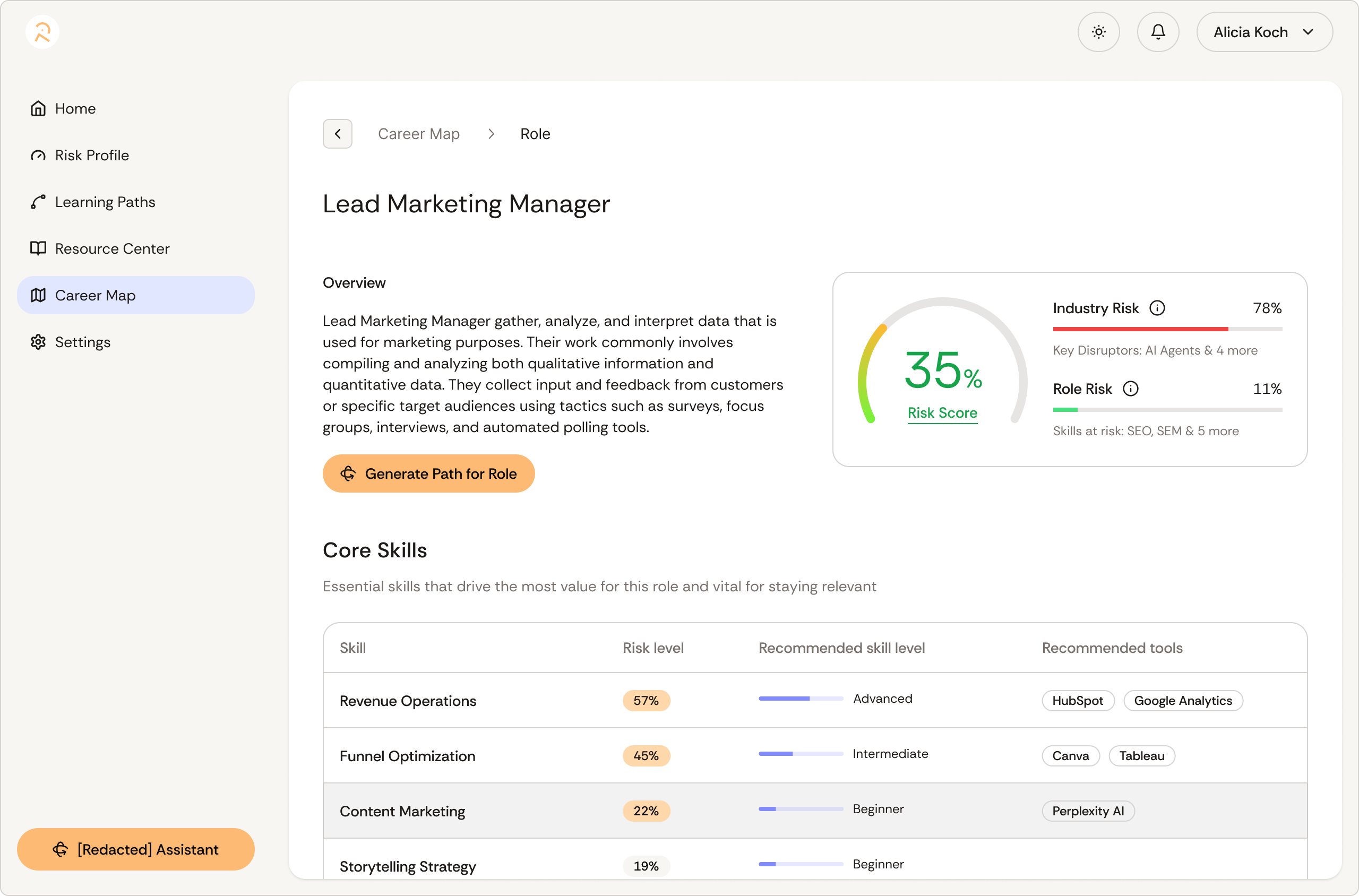
Career Map screen for marketing professionals
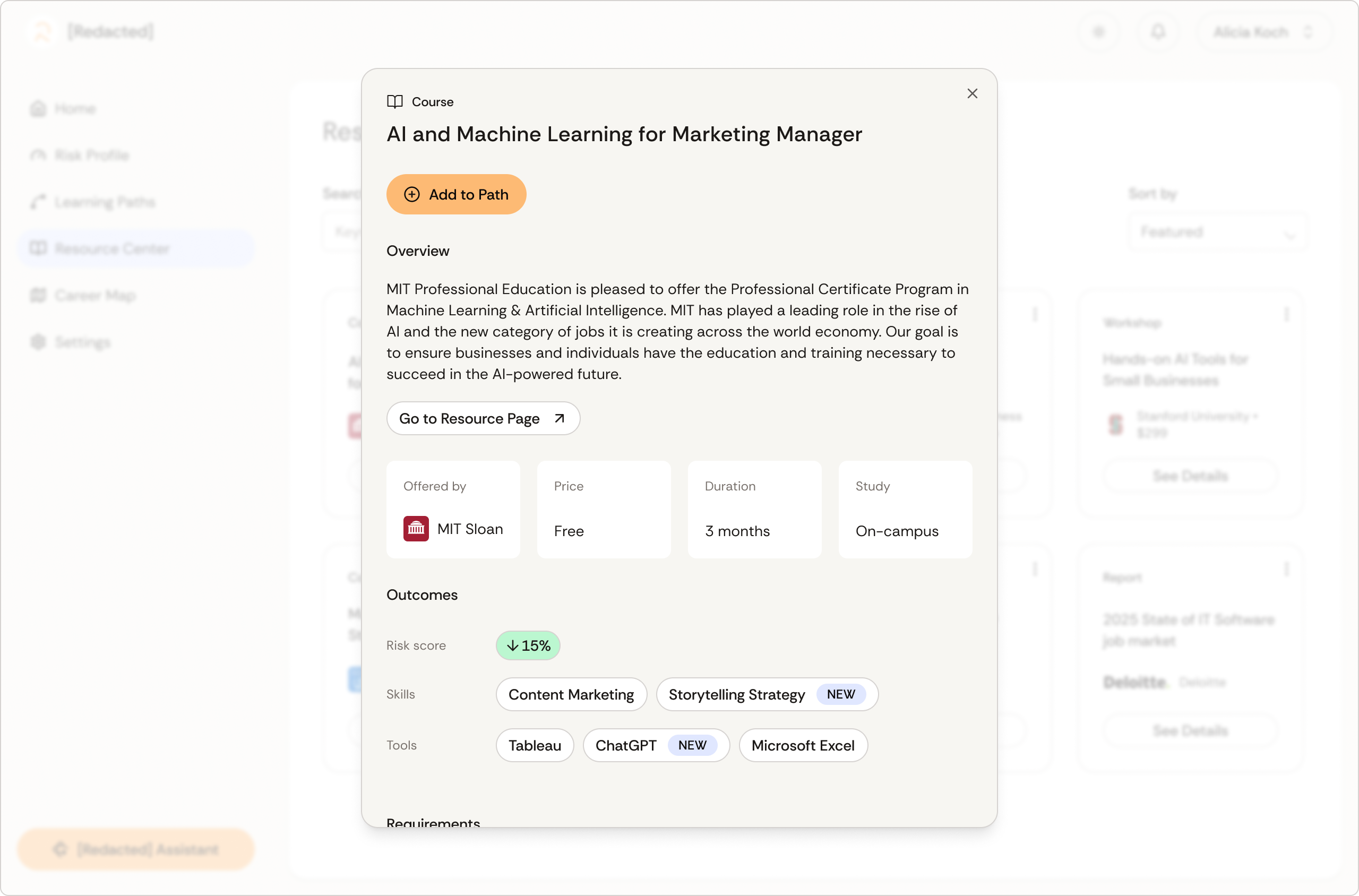
Curated course for learning path
Scaling and Handover
I communicated closely with the client's development team, reviewing each batch of designs with their leads.
We discussed using a design system for developing the designs and ultimately decided to use shadcn as the React library.
I set up a corresponding UI kit in Figma using a community resource for all components and styles used in the designs.
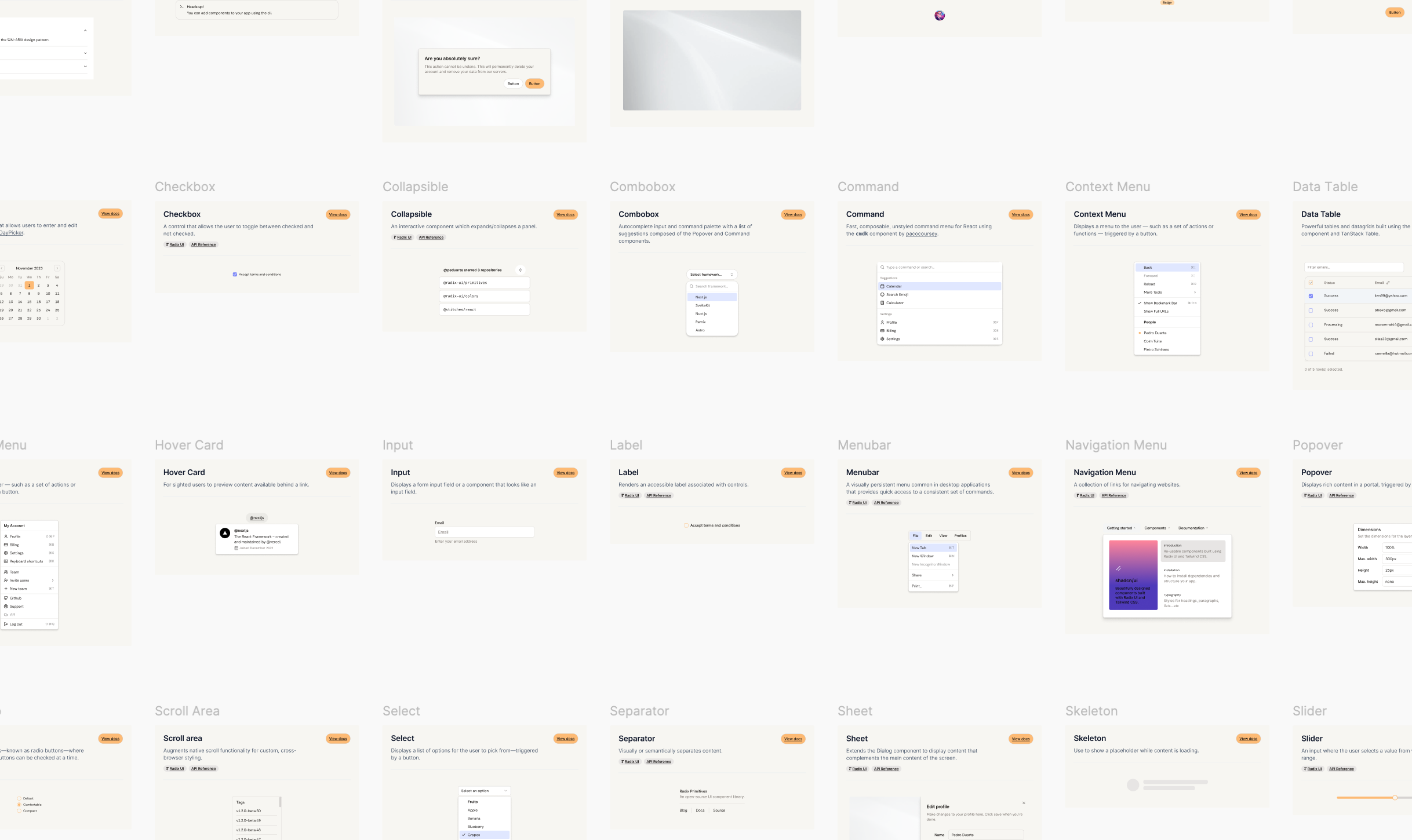
Design system library for development handover